
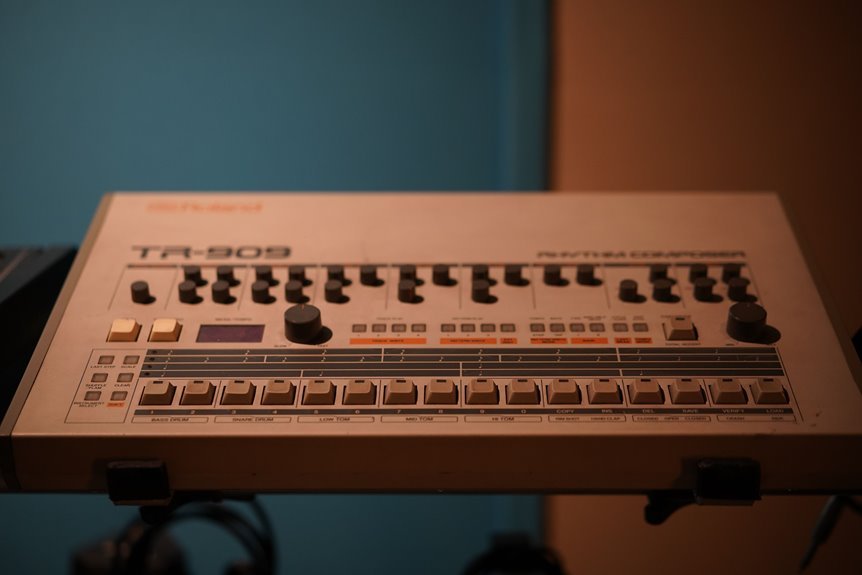
Six-eight time chains two solid beats with triplet-like subdivisions, yielding a rolling, swaying pulse. It invites an interpretive stretch between groove and meter, where feel often precedes strict counting. The difference between folk weight and jazz swing is a matter of articulation, tempo, and ambition. As listeners map how the two main pulses interact, questions arise about how pop buoyancy or rock propulsion can coexist with this flexible sway, and what that means for a songwriter’s approach.
What 6/8 Really Sounds Like and How It Feels
6/8 time often feels like two intertwined beats rather than a simple three; the compound meter divides into two main pulses, each subdividing into three, which gives music a rolling, swaying motion rather than a marching march.
Exploring pulse feel reveals subtle shifts; Rhythmic accents emphasize offbeats and tension, guiding listeners toward freedom in phrasing while maintaining musical clarity and expressive balance.
How the Beat Divides in 6/8 and Why It Matters
The beat in 6/8 divides into two primary pulses, each carrying a three-beat subdivision that gives the measure its characteristic sway.
The discussion centers on beat subdivision vs pulse feel, clarifying how rhythms align with each group.
It contrasts triplet emphasis vs swing, revealing how perception shifts when tempo and articulation shape groove and listener freedom.
Genres and Songs That Define the 6/8 Groove
If the groove of 6/8 feels like a conversation between two strong pulses, certain genres crystallize that rapport, turning rhythmic flexibility into a recognizable stamp. Genres here reveal a dialogue of groove vs groove, where subtle swing and cadences redefine momentum. The tempo feel guides perception, aligning folk-inflected lines with hypnotic rock-ballad lift, and jazz-inflected pockets toward expressive propulsion.
How to Recognize 6/8 in Pop, Rock, and Beyond
Detecting 6/8 in pop, rock, and beyond hinges on listening for two strong beats per measure that breathe with a subtle shuffle, creating a lilting sway rather than a rigid march.
The texture reveals itself through a catchy rhythm and a pronounced drum feel, guiding listeners toward a groove that feels buoyant, open, and unconstrained by conventional barlines.
Frequently Asked Questions
How Does 6/8 Differ From 3/4 in Feel?
The difference in groove gives 6/8 a rolling, triplet-based pulse, while 3/4 offers a starker, marching feel; emotional feel shifts accordingly, as composers exploit sway and propulsion, yet 3/4 vs 6/8 is not relevant to other H2s.
Can 6/8 Be Used for Fast Tempos Effectively?
Yes, 6/8 can handle fast tempo feasibility with explosive energy; its compound feel fuels groove based phrasing, offering propulsion and swing. Analyzers note acceleration happens naturally, delivering expressive drive while preserving clarity and freedom in ensembles.
What Are Common 6/8 Counting Mistakes Beginners Make?
Common counting pitfalls hinder novices: they struggle with pulse alignment and subdividing 6/8 into uneven accents. Rhythmic subdivision missteps arise when three-note feels drift into two, obscuring groove. The result is imprecise tempo and fragmented musical freedom.
Which Artists Experiment With Mixed Meter Including 6/8?
Ever wonder which artists experiment with mixed meter, including 6/8? They push boundaries, embracing ambiguity. In this landscape, artists experiment with rhythm as a dialogue, revealing nuanced textures and expressive freedom within varied meters and melodic contours.
How Is 6/8 Notated in Complex Rhythms?
6/8 in complex rhythms is notated through layered grouping and tupletization, where two-beat accents interact with subdivisions; this two word discussion ideas emerge, and complex rhythms reveal pulse displacement, syncopation, and freedom within metric ambiguity.
Conclusion
In sum, 6/8 music reveals a two-beat heartbeat where each pulse unfurls three-part arcs, shaping a rolling, swaying groove rather than rigid swing. The feel emerges from tempo, articulation, and subdivision, which together color genres from folk to pop. Recognizing the twin-pulse structure helps listeners hear nuance in meter across styles. So, does the sway of 6/8 invite you to ride the cadence or resist the current of its triplet tide?




 How Xpfkqkrtm Works: Features, Benefits, and Uses